A Small Delay That Can Destroy Your Business
In 2026, WordPress remains the backbone of millions of business websites. From small startups to large enterprises, everyone relies on plugins, themes, and regular updates to keep their sites running smoothly.
But here is the uncomfortable truth: most website owners delay updates.
Sometimes it’s because they are busy. Sometimes they fear something might break. And sometimes they simply don’t realize how dangerous ignoring updates has become.
The reality in 2026 is very different from five years ago. Cyber threats are faster. AI-driven bots scan websites 24/7. Vulnerabilities are exploited within hours of being discovered.
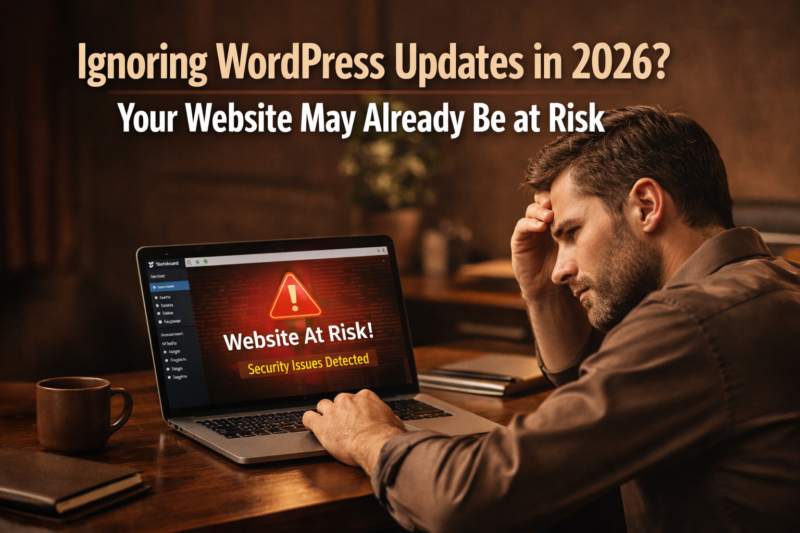
Ignoring WordPress Updates in 2026 is no longer a minor technical oversight. It is a direct business risk.
The Security Risk No One Takes Seriously
Outdated Plugins Are Hacker Entry Points
Every plugin and theme installed on your website is a potential entry door. When developers release updates, most of them include security patches. These patches fix vulnerabilities that hackers already know about.
The moment you ignore that update, your website becomes exposed.
Hackers in 2026 don’t manually guess passwords like before. They use automated scripts that scan thousands of websites every minute. If your plugin version is outdated, it gets flagged instantly.
Within minutes, malware can be injected.
What Happens After a Security Breach
When your website gets compromised, the damage spreads quietly. In most cases, business owners do not notice immediately.
The common consequences include:
- Hidden malware injected into core files
- Spam links added to your pages
- Unauthorized admin accounts created
By the time you realize something is wrong, the infection may have already spread across your entire website.
The SEO Collapse You Didn’t See Coming
Google Does Not Warn You First
Search engines in 2026 prioritize performance, security, and user experience. If your outdated plugins start slowing down your website or causing errors, your rankings begin to drop.
There is no email from Google saying, “Your plugin is outdated.”
Instead, you notice:
- Organic traffic decreasing slowly
- Rankings disappearing for important keywords
- Bounce rate increasing
Most business owners blame competition or algorithm updates. Rarely do they suspect outdated WordPress components.
Blacklisting and Security Warnings
If malware is detected, Google may show a security warning under your domain name. Sometimes browsers display a red screen saying your site is unsafe.
When that happens, user trust collapses instantly.
Once blacklisted, recovering rankings becomes extremely difficult. Even after cleanup, reputation damage remains.
Functional Breakdowns That Cost Real Money
Plugin Conflicts in 2026
WordPress core updates continue to evolve. When plugins and themes are not updated alongside the core system, conflicts happen.
Suddenly, important features stop working.
Common Business-Critical Failures
Many websites experience:
- Contact forms not sending inquiries
- Payment gateways failing during checkout
- WooCommerce orders not processing
Now imagine losing customers for weeks without knowing your checkout page is broken.
In 2026, users do not report issues. They simply leave and buy from someone else.
Data Loss and Backup Illusions
The False Sense of Security
Many business owners believe that having a backup plugin installed is enough.
But outdated backup systems often fail silently.
Backups may stop running due to compatibility issues. Restore functions may break after major WordPress core updates. Sometimes backup files get corrupted without any visible sign.
When a crash finally happens, you realize there is no usable backup.
What You Can Lose Overnight
Losing access to your data means losing:
- Customer databases
- Lead inquiries
- Product listings
- Years of blog content
Rebuilding that information is not just expensive. In many cases, it is impossible.
Hosting Suspension and Downtime
Hosting Companies Are Stricter in 2026
Hosting providers actively monitor infected websites. If malware is detected, they may suspend your account immediately to protect their servers.
This means your website goes offline without notice.
Your customers see nothing. Your emails stop functioning. Your credibility takes a hit.
Even a few days of downtime can cause irreversible financial damage, especially for eCommerce businesses.
Brand Reputation Damage
Trust Is Fragile
When visitors encounter spam popups, redirects to suspicious websites, or browser warnings, they associate the problem with your brand.
They do not think about outdated plugins or theme vulnerabilities.
They simply think your business is unsafe.
Reputation takes years to build and seconds to destroy.
In competitive industries, one security incident can permanently push customers toward competitors.
Visit more information here : urgent malware cleanup
Legal and Compliance Nightmares
Data Protection Laws in 2026
Privacy regulations are stricter than ever. If your website collects personal data and gets breached due to outdated components, you may face serious consequences.
Ignoring WordPress Updates in 2026 can lead to:
- Legal notices from affected customers
- Data protection investigations
- Heavy financial penalties
Even small businesses are not exempt from compliance requirements.
Legal trouble combined with reputation damage can cripple operations permanently.
The Hidden Financial Impact
Small Delays Turn Into Big Costs
When updates are ignored for months, technical debt builds up.
Minor issues accumulate until the website becomes unstable. Fixing years of neglect is far more complicated than maintaining regular updates.
By the time business owners contact companies like Prime Web Help, the damage often includes malware infections, broken functionality, and severe SEO decline.
At that stage, restoration becomes time-consuming and costly.
Revenue Loss That Goes Unnoticed
Not all losses are dramatic.
- Sometimes it is just:
- Fewer daily inquiries
- Slight drop in sales
- Gradual traffic decline
- Because the decline is slow, many business owners do not connect it with outdated WordPress components.
But over a year, that silent loss can equal thousands in missed revenue.
Competitors Are Not Waiting
The Competitive Gap in 2026
While some businesses delay updates, others prioritize performance and security.
Secure, fast websites rank higher. They load faster on mobile devices. They build trust instantly.
If your website struggles with outdated systems, your competitors gain an advantage every single day.
In modern digital markets, stability equals credibility.
And credibility drives sales.
Real Patterns We See in 2026
At PrimeWebHelp, many website owners reach out only after experiencing major problems.
Common situations include outdated plugins running for over a year, themes never updated since installation, and security vulnerabilities ignored completely.
By the time they seek help, the website has already suffered traffic drops, malware infections, or hosting suspension.
Most of them say the same thing: they thought nothing would happen.
Why Ignoring WordPress Updates in 2026 Is More Dangerous Than Ever
Technology has evolved. Cybercrime has evolved even faster.
AI-driven scanning tools identify outdated websites automatically. Vulnerabilities are exploited within hours of disclosure. Attackers do not target specific businesses anymore; they target weaknesses. If your website has one, it becomes a target. The cost of ignoring WordPress Updates in 2026 is not immediate in every case. But when it hits, it hits hard.
Final Thoughts
Delaying updates may feel harmless today.
Your website might still be loading. Your design may still look fine. Customers may not be complaining yet.
But underneath the surface, risks may already be building.
Security gaps.
SEO instability.
Functional breakdowns.
Data vulnerabilities.
In 2026, maintaining an outdated WordPress website is like running a business without locking the front door. And the hidden cost is often discovered only after real damage is done. If your business depends on your website, ignoring WordPress Updates in 2026 is a risk you cannot afford to take.
FAQs – WordPress Updates in 2026
What happens if I ignore WordPress updates in 2026?
Ignoring WordPress updates in 2026 can expose your website to security vulnerabilities, malware infections, SEO damage, and performance issues. Hackers actively scan outdated plugins and themes, making your site an easy target without you even realizing it.
Can outdated plugins really cause website hacking?
Yes. Most WordPress hacks happen due to outdated plugins and themes. When developers release updates, they often fix security loopholes. If you don’t update, those known vulnerabilities remain open for attackers to exploit.
Will ignoring updates affect my SEO rankings?
Absolutely. Outdated components can slow down your website, break technical SEO elements, and even trigger Google security warnings. This can lead to traffic loss, ranking drops, and reduced visibility in search results.
How do I know if my website is already at risk?
Warning signs include sudden traffic drops, unknown admin users, spam links on your pages, slow loading speed, or hosting suspension notices. However, many infections stay hidden until serious damage is done.
Is it risky to update WordPress without professional help?
Yes, especially in 2026 where plugin conflicts and compatibility issues are common. Improper updates can break your website, disable payment gateways, or cause complete downtime.
If you are unsure whether your website is fully updated and secure, waiting could cost you more than you think. Security breaches, SEO losses, and website crashes don’t come with advance warnings.
Don’t let outdated plugins silently damage your business.
Visit WordPress security experts today and make sure your WordPress website isn’t already at risk. Before small issues turn into expensive disasters.