
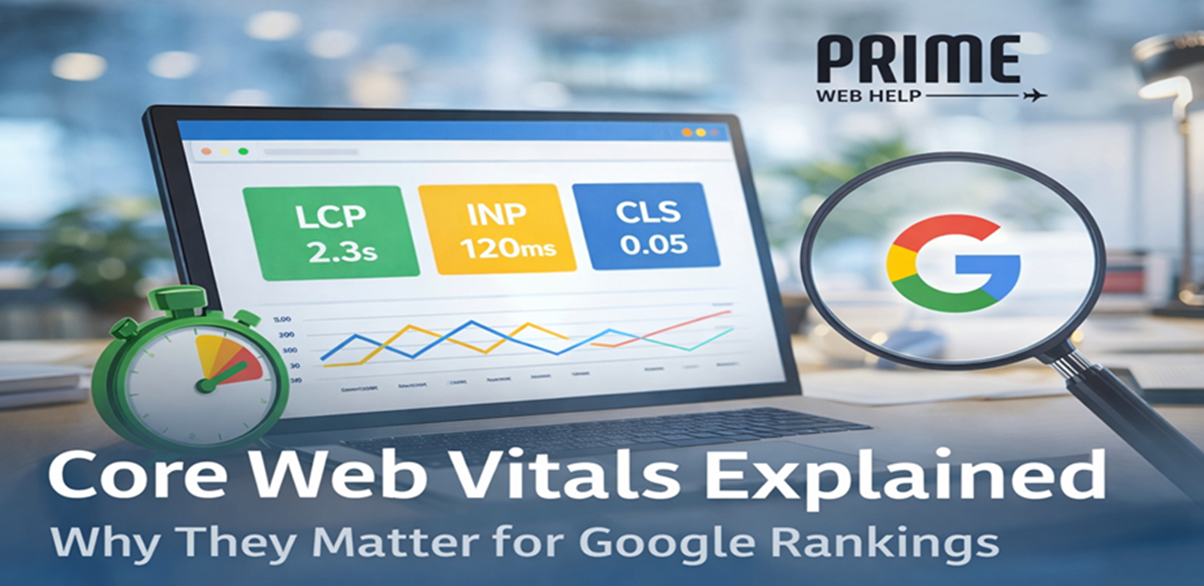
Search engine optimization is no longer limited to keywords and backlinks. Google has shifted its focus toward real user experience, and this change has made Core Web Vitals one of the most important factors in modern SEO. Today, a website’s success depends not only on what it says, but also on how it performs for real users.
For businesses that want sustainable growth, strong visibility, and long-term rankings, understanding Core Web Vitals is essential. These metrics directly influence how Google evaluates website quality and user satisfaction.
Understanding Core Web Vitals
Core Web Vitals are a set of user experience signals defined by Google to measure how visitors experience a web page in real-world conditions. Unlike traditional performance indicators, these metrics focus on how users actually feel while browsing a website.
Google evaluates websites based on three key aspects:
- How fast the main content loads
- How responsive the page feels during interaction
- How stable the layout remains while loading
Together, these elements form the foundation of Core Web Vitals.
Why Google Introduced Core Web Vitals
Google’s primary goal is to deliver the best possible experience to its users. Over time, Google observed that users tend to leave slow, unstable, or unresponsive websites even if the content is relevant.
Core Web Vitals were introduced to:
- Measure real user experience instead of theoretical performance
- Encourage higher-quality web experiences
- Reward websites that prioritize usability and reliability
- Reduce frustration caused by slow or unstable pages
By using these metrics, Google can differentiate between websites that simply exist and websites that genuinely serve users well.
Largest Contentful Paint (LCP) Loading Experience
Largest Contentful Paint measures the time it takes for the main visible content of a page to load. This could be a large image, a banner, or a primary text block that users expect to see first.
Why LCP Matters
When users open a page, they subconsciously judge its quality within seconds. If the main content takes too long to appear, the page feels slow and unreliable.
A poor LCP score often leads to:
- Higher bounce rates
- Reduced engagement
- Lower trust in the brand
- Missed conversion opportunities
From Google’s perspective, slow-loading main content indicates a subpar user experience.
Interaction to Next Paint (INP): Responsiveness Experience
Interaction to Next Paint measures how quickly a website responds when a user interacts with it, such as clicking a button, opening a menu, or submitting a form.
Why INP Is Important
Even if a website loads quickly, slow response to user actions creates frustration. Users expect instant feedback when they interact with a page.
Poor responsiveness can result in:
- Users abandoning forms
- Reduced interaction with content
- Negative perception of professionalism
- Lower engagement signals for search engines
Google uses INP to understand how interactive and responsive a website feels during real usage.
Cumulative Layout Shift (CLS): Visual Stability
Cumulative Layout Shift measures how much a page’s layout moves unexpectedly while loading. Sudden shifts in text, buttons, or images can confuse users and disrupt their experience.
Why CLS Impacts User Trust
Unexpected movement on a page can cause users to:
- Click the wrong element
- Lose their reading position
- Feel the site is poorly built
- Question the credibility of the business
From Google’s point of view, layout instability signals poor usability and lack of attention to user experience.
Core Web Vitals as a Google Ranking Signal
Core Web Vitals are part of Google’s Page Experience ranking system. While content relevance remains crucial, performance and usability now act as deciding factors when competing pages offer similar information.
Websites with strong Core Web Vitals benefit from:
- Improved ranking stability
- Better visibility in competitive keywords
- Stronger performance on mobile search
- Increased user retention
Ignoring these signals can weaken even well-optimized content.
Impact on Mobile Search Rankings
Google follows **mobile-first indexing**, meaning it evaluates the mobile version of a website before the desktop version. Mobile users are more sensitive to delays, layout shifts, and poor responsiveness.
If Core Web Vitals perform poorly on mobile devices, the impact on rankings can be significant. This makes performance consistency across devices essential for modern SEO success.
Relationship Between Core Web Vitals and User Behavior
User behavior signals such as bounce rate, time on site, and interaction depth are indirectly influenced by Core Web Vitals.
When a website feels slow or unstable:
- Users leave faster
- Engagement decreases
- Conversion intent drops
- Brand credibility suffers
Search engines interpret these behavioral patterns as indicators of low-quality experience.
Core Web Vitals and Business Credibility
A website is often the first impression of a business. Performance issues can make even established brands appear unprofessional.
Strong Core Web Vitals help convey:
- Technical reliability
- Attention to quality
- User-focused design
- Professional brand image
In contrast, poor performance can undermine trust before users even read the content.
Why Core Web Vitals Are a Long-Term SEO Factor
Core Web Vitals are not a temporary trend. Google continues to refine and update its experience-based ranking systems. As user expectations rise, performance standards will only become stricter.
Websites that ignore Core Web Vitals risk:
- Gradual ranking decline
- Reduced organic traffic
- Lower engagement over time
- Falling behind competitors
Understanding these metrics early gives businesses a strategic advantage.
Final Thoughts
Core Web Vitals represent a major shift in how websites are evaluated by Google. They emphasize real user experience over technical shortcuts, making them essential for long-term SEO success.
Prime Web Help specializes in building and maintaining high-performance websites that rank better, load faster, and convert more visitors into customers.
If you want your website to meet Google’s latest standards and stay ahead of competitors, optimizing Core Web Vitals is the smartest move you can make today.