
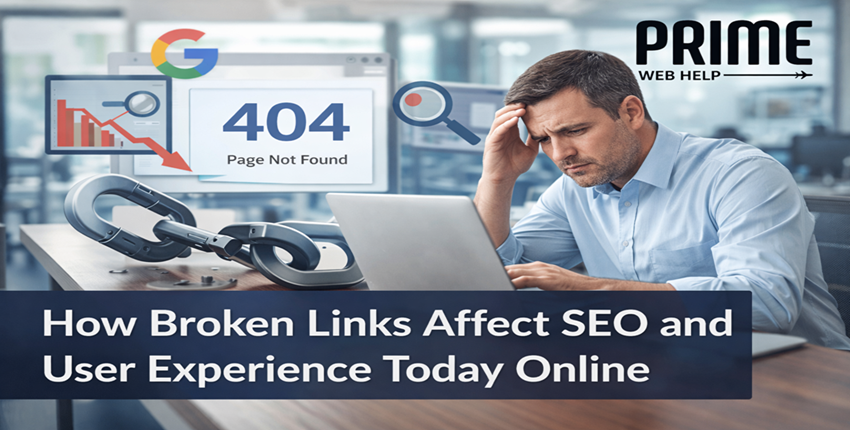
Broken links may appear harmless at first, but over time they create serious issues for search engine optimization (SEO) and user experience (UX). Understanding their impact is essential for anyone managing a website in today’s competitive online environment.
In the modern Digital Landscape,websites are expected to be fast, reliable, and seamless. Users want instant access to information, and search engines aim to deliver the most relevant and trustworthy results. One often overlooked factor that quietly damages both visibility and credibility is broken link.
Understanding Broken Link in Simple Terms
A broken link is a hyperlink that fails to open the intended page. Instead of content, users encounter error messages such as 404 Page Not Found. These errors occur when a linked page no longer exists, has been moved, or the URL was entered incorrectly.
Broken links are common across all types of websites, including blogs, business sites, and large content portals. As websites grow and content changes, links naturally become outdated if not reviewed regularly.
Why Broken Link Are a Serious SEO Concern
Search engines rely heavily on links to discover, crawl, and understand website content. When links break, this process is disrupted.
- Crawl Efficiency and Indexing Issues
Search engine bots move through websites by following links. Broken links interrupt this flow, making it harder for bots to reach important pages. Over time, this can result in incomplete indexing or delayed discovery of updated content. - Weakening of Site Structure
Internal links help define website hierarchy and page importance. Broken internal links damage this structure, making it harder for search engines to understand which pages matter most. - Loss of Authority Flow
Links help distribute authority across a website. When links break, this authority flow is interrupted, reducing the overall SEO strength of connected pages. - Perception of Poor Quality
Search engines assess website quality holistically. A high number of broken links suggests poor maintenance, outdated content, and reduced reliability, all of which can negatively influence rankings.
How Broken Links Impact User Experience
SEO may bring visitors to a website, but user experience determines whether they stay.
- Immediate User Frustration
When users click a link expecting valuable content and encounter an error instead, frustration sets in immediately. This breaks trust and reduces confidence in the website. - Increased Bounce Rate
Broken links often cause users to leave without exploring further. This increases bounce rate, which can indirectly affect search performance and engagement metrics. - Disrupted Navigation
Websites are designed to guide users logically from one page to another. Broken links interrupt this journey, preventing users from accessing related content or completing intended actions. - Reduced Time on Site
A smooth browsing experience encourages users to spend more time exploring. Broken links shorten sessions and reduce overall engagement.
Internal vs External Broken Links
- Internal Broken Links
These occur when pages within the same website link to missing or removed pages. They are particularly harmful because they affect navigation, site structure, and SEO simultaneously. - External Broken Links
These happen when a website links to external pages that no longer exist. While less damaging than internal issues, they still reduce content quality and user trust.
Both types contribute to a negative experience when left unaddressed.
Broken Link and Website Credibility
A website reflects the professionalism of the brand behind it. Broken links send subtle but powerful negative signals.
- The site appears outdated
- Content feels neglected
- Reliability is questioned
For first-time visitors, these signals can determine whether they stay or leave. For returning users, repeated errors reduce long-term trust.
Content Decay and Broken Link
As content ages, it naturally becomes vulnerable to broken links. Old blog posts, outdated resources, and archived pages often contain links that no longer work.
This process, sometimes called content decay, slowly reduces the effectiveness of previously valuable pages. Without maintenance, even high-quality content loses its impact over time.
How Search Engines Interpret Broken Link Today
Search engines do not immediately penalize websites for a small number of broken links. However, patterns matter.
When broken links appear frequently across a site, they signal:
- Poor content management
- Lack of updates
- Declining relevance
Over time, this can reduce crawl priority and overall search visibility.
The Role of Broken Links in Competitive Niches
In highly competitive industries, technical quality can be the deciding factor between ranking on page one or page two.
Websites with:
- Clean navigation
- Functional links
- Consistent user experience
Even minor problems like broken links can create measurable gaps in performance.
Areas Where Broken Links Commonly Appear
Broken links are most often found in:
- Older blog articles
- Footer navigation
- Resource and reference sections
- Image and media URLs
- Category or tag pages
These areas are frequently overlooked during updates, making them more vulnerable.
Long-Term Impact on Website Performance
Ignoring broken links does not usually cause immediate damage, but the long-term effects are significant.
- Gradual decline in organic visibility
- Lower engagement metrics
- Reduced user trust
- Weaker site authority
Over months or years, these effects compound, making recovery more difficult.
Why Broken Link Matter More Today Than Ever
User expectations have evolved. Modern users demand speed, accuracy, and seamless navigation. At the same time, search engines are more sophisticated in evaluating website quality.
Broken links represent friction in an environment where friction is no longer tolerated.
Final Thoughts
Broken links may seem like a minor technical issue, but their impact on SEO and user experience is far-reaching. They affect crawlability, site structure, trust, engagement, and long-term performance.
At Prime Web Help, content quality and website performance are viewed as long-term assets, where consistency, structure, and user-focused design play a vital role in digital success.